



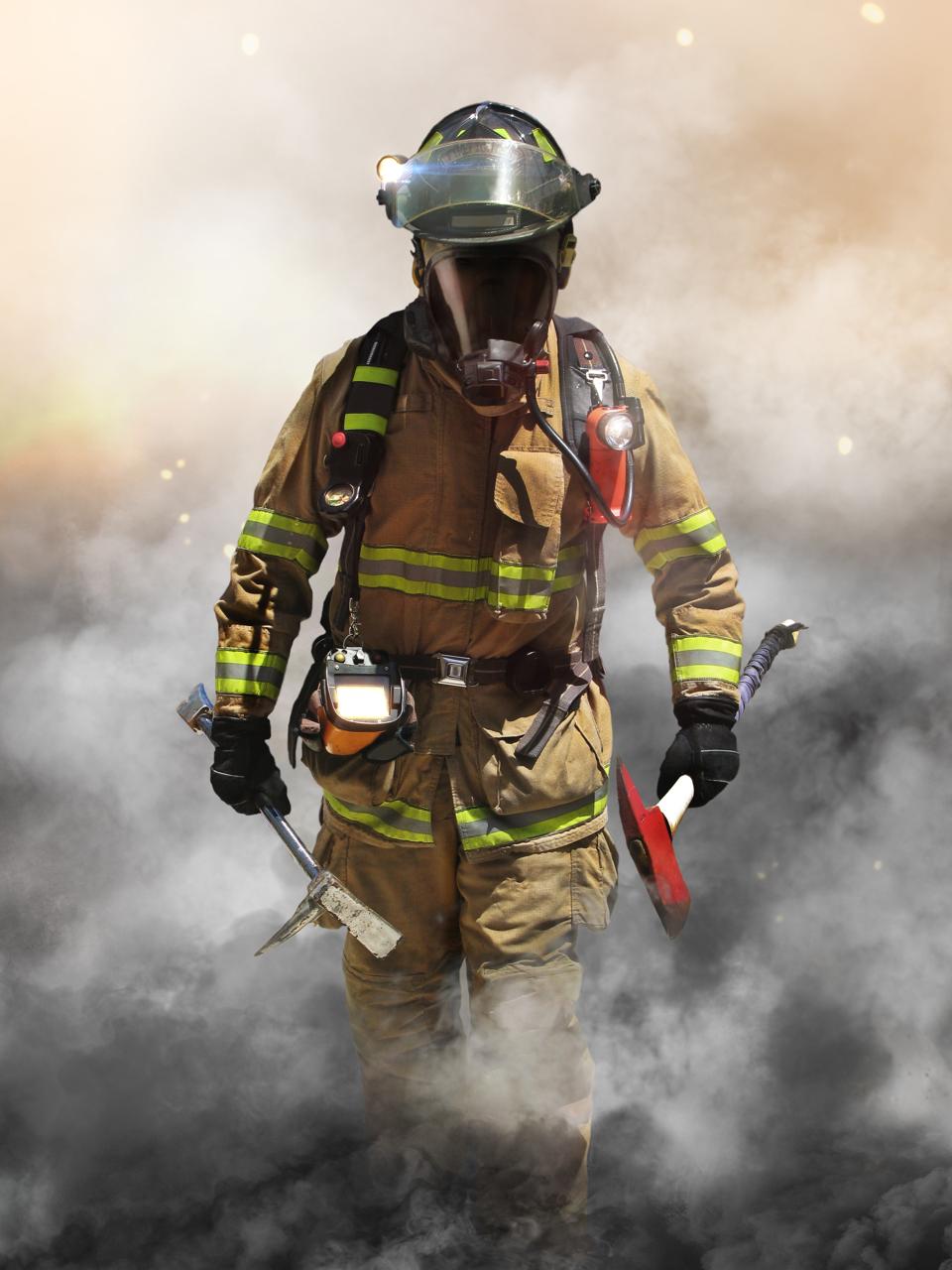
As wildfires intensify, a new generation of AI systems is learning to detect and fight flames before crews can respond.
getty
Wildfires have stopped waiting for summer. They now burn through entire regions year-round, fuelled by heat, wind and drought. Every season brings new records: Higher losses, longer evacuations and entire towns erased in hours.
In the first half of 2025 alone, global insured losses from natural disasters reached about $80 billion, much of it from wildfires and severe storms, according to Reuters. Firefighters battle exhaustion, insurers retreat from high-risk zones and communities are left searching for new ways to defend themselves.
That search has turned toward a bold question — can machines help fight the fires themselves? In Israel, Tel Aviv–based FireDome recently demonstrated an AI system that can detect and suppress small flames within seconds, long before human crews arrive. It’s part of a wider movement to use AI not just for prediction but for intervention, narrowing the gap between early warning and real-time response in wildfires.
Wildfire Resilience-as-a-Service
For decades, wildfire technology focused on detection. Satellites, drones and sensors signaled when a blaze was already spreading. But today’s new AI systems are now trying to act in the moment. They combine thermal cameras, machine-learning algorithms and localized suppression units that can react instantly when a heat anomaly appears near homes or businesses.
FireDome’s field test in October 2025 showed one version of that approach, using sensors and AI models trained on millions of wildfire images to trigger precision-launched capsules filled with water or eco-friendly retardant. The company described the event as a step toward “wildfire Resilience-as-a-Service,” in which communities could deploy automated systems that respond the moment a threat emerges.
“This is the turning point,” said Gadi Benjamini, FireDome’s cofounder and CEO, in a press release. “Wildfires are getting bigger, costlier, and harder to insure against. This demonstration shows FireDome can act in seconds to protect lives, property rights and critical assets before first responders arrive.”
What remains uncertain is the scale of innovative systems like FireDome’s, although the company claims its system is efficient even for big wildfires. While the company’s demonstration holds promise, questions about reliability and safety linger. Can systems like this operate reliably outside test sites, in unpredictable terrain and shifting winds? And can they integrate safely with human firefighting crews already stretched thin? It’s left to be seen how these systems respond when deployed in the wild.
Teaching Machines To Respond
Indeed, the true promise of these technologies lies in how they learn. Vision models identify heat signatures and verify that an area is clear of people, vehicles, or animals. Machine-learning algorithms then adjust for factors like wind and slope, deciding when and where to act. Each activation feeds new data back into the model, improving accuracy over time.
AI researchers refer to this as closed-loop learning: The system observes, acts, measures the result and adapts. It’s the same principle behind self-driving cars or industrial robotics but applied to a volatile natural environment.
In disaster response, that ability to learn continuously could help machines assist faster than any human coordination network can manage — if oversight keeps pace.
Speed Meets Responsibility
Supporters see potential beyond firefighting. Former U.S. Fire Administrator Dr. Lori Moore-Merrell said in a statement that integrating automated systems with precision suppression could help insurers and governments rethink how they price and manage wildfire risk. Yet autonomy raises new concerns about certification, liability and how to ensure split-second decisions made by algorithms are safe and accountable.
Benjamini acknowledges that tension, noting that technology is only part of the solution. “AI can help us move faster,” he said, “but it has to move responsibly. The goal isn’t to replace firefighters — it’s to give them time.”
This is where policy will have to catch up. Deploying AI in physical disaster zones blurs the boundary between assistance and autonomy. Communities will need clear rules about who controls these systems, how errors are reported, and what happens when human and machine decisions collide.
A New AI Chapter In Climate Response
The emergence of autonomous wildfire systems marks a broader turning point in climate adaptation. Instead of sitting in data centers, AI is moving into forests, floodplains and power grids — environments where every second counts. Whether the goal is suppressing fires, predicting floods, or protecting energy lines, AI is shifting from analysis to action.
Insurance Journal expects global insured losses from climate-driven disasters to reach $145 billion by the end of 2025. That pressure is forcing governments and companies to look for faster, smarter ways to limit damage. Systems like FireDome’s will not replace human responders, but they could become an added layer of protection that acts when danger strikes and communication lines fail.
What’s emerging isn’t just a new tool but a new kind of partnership between intelligence and resilience. The challenge now is to build that partnership on trust, transparency and proof that it truly works when the next inferno razes all in its path.